
Spread knowledge, not the virus
Without intervention, it is estimated that an individual with the virus will infect on average 3-4 other people, resulting in an exponential increase in the number of cases over time. If social connectivity can be lowered such that the average number of people that an individual with the virus infects is less than one other person, the number of cases will exponentially decrease over time instead.
Global COVID-19 worldwide cases
Today's updates
26 March 2021
399,946 confirmed cases and 16,000 deaths. These numbers are still increasing.
- Italy: +5,210
- China: +47
- Spain: +5,552
- Iran: +2,206
- USA: +7,996
- Germany: +7,996
Tips
Your family and community need you to:
Wash your hands!
Clean surfaces and use alcohol gel

Cancel travel plans
It’s a small price to save lives!

Stay at home
Even if healthy — especially if you feel sick
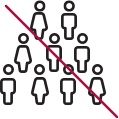
Avoid crowds
Including public transport, parties and bars — they’ll always be there later
Monitor your health
Call a doctor if you have a temperature at or above 38°C or 100.4°F

Work remotely
If at all possible and avoid making colleagues spreaders as well
Cover your face
Whenever you cough or sneeze, simple but effective

Any questions?
For more information check out our FAQ and guidelines
Guidlines
What can I do to prevent infection and spread of COVID-19?
There are several steps that we can take to stop the spread. Our experts have written detailed guides on how to combat COVID-19.
Sign up
The key to stopping the spread of the virus is to lower connectivity
Every time the virus does not infect another person, it has a massive impact on reducing the growth of overall infections. The better informed we all are on the actions we can take, the better we will serve our most vulnerable loved ones and our healthcare infrastructure at large.
Without intervention, it is estimated that an individual with the virus will infect on average 3-4 other people, resulting in an exponential increase in the number of cases over time. If social connectivity can be lowered such that the average number of people that an individual with the virus infects is less than one other person, the number of cases will exponentially decrease over time instead.
Stay informed with the latest news on preventing and defeating the spread of COVID-19, written and published by experts in the field.
Why are people so afraid of this outbreak, isn't it just like the normal flu?
The Coronavirus causes about 20% severe cases and 2% deaths. This is about 20 times higher than the flu.
A typical incubation period is 3 days but it may extend to 14 days, and reports exist of 24 and 27 days.
It is highly contagious with an increase from day to day of 50% in new cases (infection rate R0 of about 3-4) unless extraordinary interventions are made.
Track New Cases Globally:
There is no shortage of updates on the Coronavirus. The focus of our work is to provide relevant information that leads to pragmatic actions for single individuals, employers, governments and NGOs
Take part in eradicating this epidemic
endCoronavirus.org is built and maintained by the New England Complex Systems Institute (NECSI) and collaborators. Our goal is to minimize the impact of the Coronavirus COVID-19 by providing useful data and guidelines for action.
Everyone can help, Join us
to help your communities and families, create safe zones